If life is destined to be short and bitter,
then indulge in some sweet treats to sweeten it up!
Today we're talking about the egg tart (a formidable character!)
Egg custard tart (international name)
dàntà (standard Mandarin)
[Quick Tip: In Western pastries, open-faced fillings are ‘tarts’, while sealed crusts are ‘pies’.]
Rumor has it egg tarts were the favorite treat of Hong Kong's last governor, Chris Patten. During his 2008 book signing visit, he told reporters publishing the book gave him an excuse to indulge in Hong Kong's egg tarts.
Aren't egg tarts a Western creation? Why would the governor go to such lengths—traveling thousands of miles across oceans—just to eat them?
Let me explain (a history of custard pudding evolution):
As early as the Middle Ages (5th–15th centuries AD), the British were already using dairy products, sugar, eggs, and various spices to create egg tart-like confections (somewhat resembling a custard pudding made from milk, sugar, and eggs, but without the pastry shell). Records show egg tarts were served at a banquet hosted by King Henry IV of England in 1399. (What a legacy! The British surely never imagined their invention would “rise” in the East over 600 years later.)
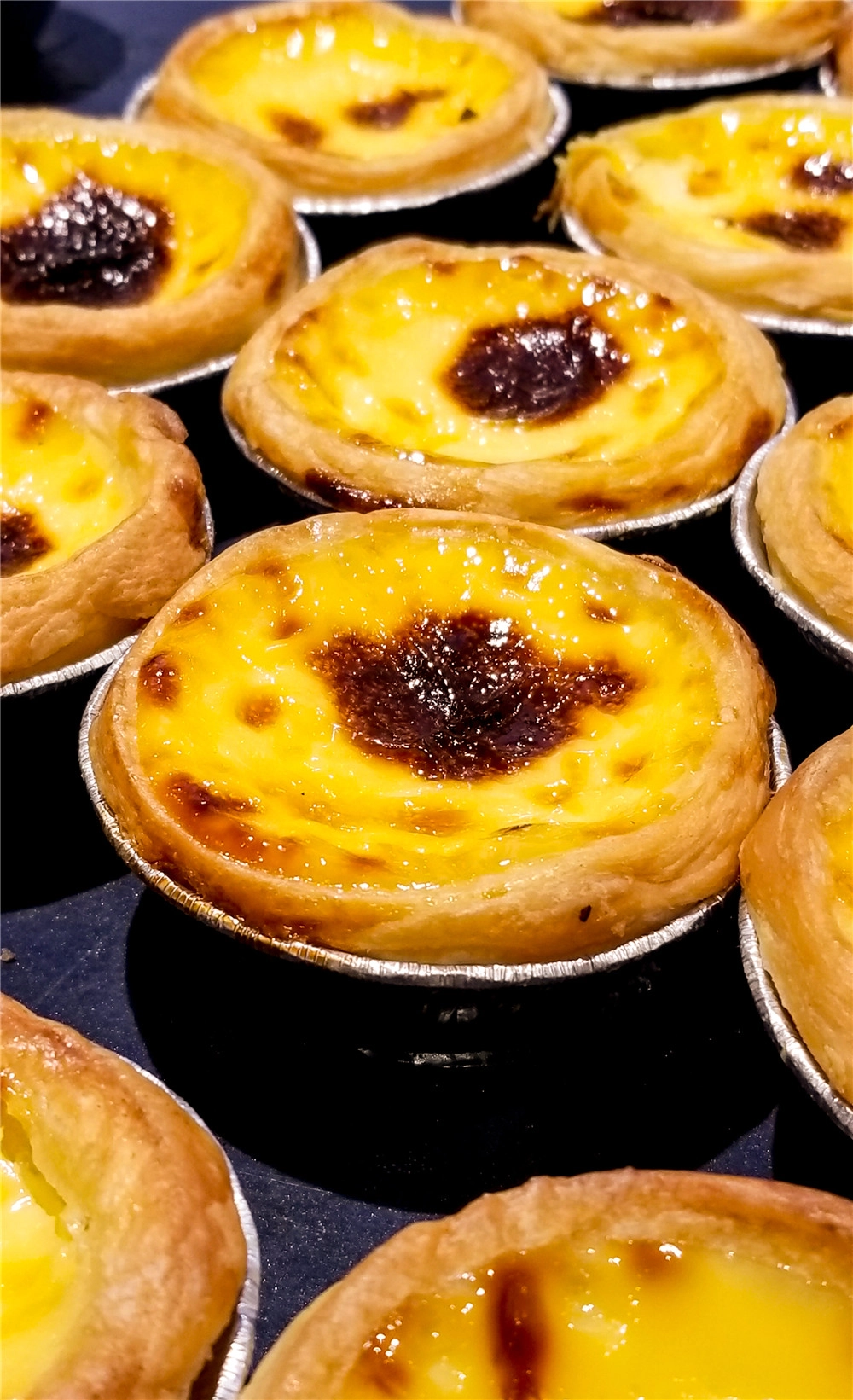
In 1920s Guangzhou, fierce competition among department stores drove their chefs to introduce weekly “specialty pastries” as draws. In 1927, Zhen Guang Restaurant pioneered the egg tart, which became wildly popular and inspired imitations across other restaurants and teahouses. However, this version was refined—the Cantonese-style egg tart. Cantonese bakers added a layer of pastry—shortcrust—but since fresh butter was costly, bakers substituted lard. Combined with simple, inexpensive egg custard, they created steaming hot egg tarts. (Thus, the egg tarts we enjoy today are, in essence, a culinary creation born from Chinese ingenuity.)
During the 1940s and 1950s, amid China's wars (the War of Resistance Against Japan and the Chinese Civil War), egg tart artisans migrated to the relatively stable environment of Hong Kong, bringing their craft with them. Hong Kongers further refined the recipe, giving rise to the uniquely Hong Kong-style egg tart. Those who tasted it became instantly devoted to its flavor. Numerous Hong Kong egg tart shops gained fame both locally and internationally. Foreign visitors to Hong Kong inevitably sample these tarts. Recognized by the Hong Kong government, egg tarts were officially listed as item 5.33 on Hong Kong's inaugural Intangible Cultural Heritage List in June 2014. (I'm not sure why the decimal point is there, but it just looks impressive!)
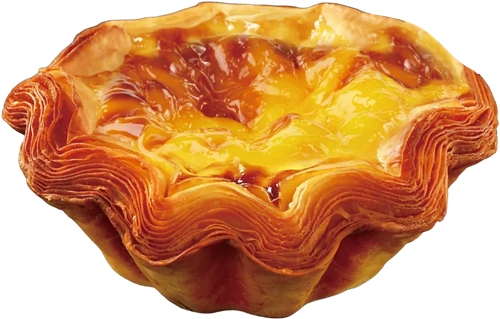
You've likely also heard of Portuguese-style egg tarts. Portuguese egg tarts were originally invented by nuns at the Jerónimos Monastery in Belém, Lisbon, Portugal, during the 19th century. In 1989, British entrepreneur Andrew Stood brought Portuguese egg tarts to Macau. After adapting the recipe with British-style custard filling and reducing sugar content, they quickly gained popularity and became a renowned Macau snack. In 1989, Andrew opened Andrew's Pastry Shop at No. 1 Rua da Tapa, Coloane, establishing it as the originator of Portuguese egg tarts. Subsequently, branches spread across mainland China, Hong Kong, Taiwan, Japan, Thailand, the Philippines, and South Korea, with numerous imitators emerging. After his divorce from Margaret in 1997, she operated a shop on the Macau Peninsula under the name Margaret's Pastry Shop. Later, she collaborated with KFC to launch a combo meal.
 |
 |
 |